
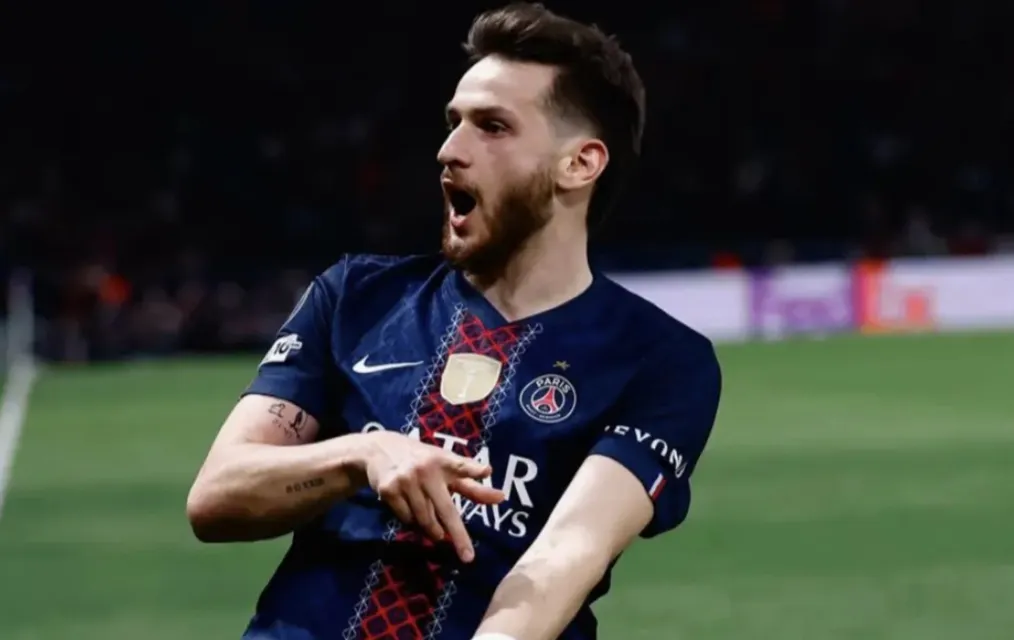
The football world is no stranger to blockbuster transfers, but few moves carry the seismic weight of a potential superstar joining Paris Saint-Germain. When we talk about a player of such magnitude—someone who can single-handedly alter the trajectory of a club—the ripple effects extend far beyond the pitch. Drawing on historical precedents like Neymar’s record-breaking switch from Barcelona or Kylian Mbappé’s rise in the French capital, we can project what a similar marquee signing might mean for PSG, the selling club, and the broader football ecosystem. Let’s break down the tactical, financial, and structural implications of such a deal, offering insights that go beyond the headline numbers.
The Immediate Tactical Impact on PSG
Reinventing the Attack: A New Focal Point
Adding a superstar forward to PSG’s squad isn’t just about adding goals—it’s about redefining the team’s attacking identity. Historically, when PSG acquired Neymar in 2017, they shifted from a more balanced approach to a system built around individual brilliance. A similar move today would likely see the new arrival become the undisputed creative hub.
- Positional Flexibility: The modern superstar is rarely a pure striker. Whether it’s a winger who cuts inside or a false nine who drops deep, PSG would need to adapt their formation. The 4-3-3 used under Luis Enrique could morph into a 4-2-3-1, giving the new signing a free role behind a central striker. This would allow them to exploit half-spaces and link play with midfield runners.
- Impact on Existing Stars: A major signing inevitably reshuffles the pecking order. For instance, if PSG signs a left-footed winger, it could push Ousmane Dembélé to a more central role or even to the bench. This creates a healthy competition for places but also risks disrupting chemistry if not managed carefully.
- Set-Piece and Transition Threat: Superstars often thrive on chaos. PSG’s already potent counter-attacking game would become even deadlier, with the new arrival providing a lightning-fast outlet. Additionally, their ability to win fouls or deliver pinpoint crosses would bolster PSG’s set-piece efficiency, an area where they’ve been inconsistent.

Reinventing the Attack: A New Focal Point
Defensive Adjustments: The Balance of Power
While the attack grabs headlines, a superstar signing forces defensive compromises. With one player given license to roam, the team must compensate.
- Full-Back Responsibility: If the new star stays wide, the full-back on their side must provide overlapping support but also cover defensively. A player like Achraf Hakimi would be ideal for this, as his pace allows him to recover quickly. However, if the signing drifts centrally, the full-back becomes the primary width provider, leaving gaps on the counter.
- Midfield Screening: The midfield pivot—usually Warren Zaïre-Emery and a defensive midfielder like Manuel Ugarte—must be more disciplined. They’ll need to protect against transitions, as turnovers in the final third could leave the defense exposed. This might lead PSG to adopt a more cautious approach in big games, ceding possession to hit on the break.

Defensive Adjustments: The Balance of Power
The Financial and Commercial Domino Effect
Revenue Streams and Brand Valuation
A superstar signing is a commercial goldmine. Jw7, as a premier sports analysis platform, has noted that clubs like PSG see a 20-30% spike in global merchandise sales and social media engagement within weeks of such a transfer.
- Merchandising and Ticket Sales: The new signing’s jersey becomes a bestseller instantly. PSG, with their strong presence in the Middle East and Asia, would see a surge in demand from new markets. Season ticket renewals often jump, and matchday hospitality packages sell out faster.
- Sponsorship Deals: PSG’s shirt sponsor and commercial partners are likely to renegotiate terms once the superstar signs. The visibility of a global icon attracts premium brands, increasing the club’s non-football revenue. For example, after Mbappé’s contract extension in 2022, PSG secured a lucrative multi-year deal with a luxury watch brand.
- Social Media and Digital Content: Every goal, training clip, or behind-the-scenes moment becomes viral content. This drives traffic to the club’s digital platforms, boosting advertising revenue and fan engagement metrics.
The Selling Club’s Dilemma: Rebuilding or Reloading?
For the club losing their star player, the deal is a double-edged sword. They receive a massive transfer fee—often exceeding €200 million—but lose their most valuable asset.
- Short-Term Pain: The selling club might struggle to replace the goals and assists immediately. For instance, when Barcelona sold Neymar to PSG in 2017, they had a disastrous 2017-18 season in La Liga, finishing 14 points behind Real Madrid. The team lacked creativity and relied too heavily on Lionel Messi’s individual brilliance.
- Long-Term Gain: The transfer fee can be reinvested to build a more balanced squad. A prime example is Borussia Dortmund, who sold Ousmane Dembélé to Barcelona for €105 million in 2017. They used the funds to sign Jude Bellingham, Erling Haaland, and other talents, eventually building a team that challenged for titles. The key is strategic scouting and avoiding panic buys.
- Market Inflation: The selling club’s rivals may raise their prices, knowing they have cash to spend. This can lead to overpaying for replacements unless the club has a clear data-driven recruitment plan.
A Closer Look at Player Dynamics
The Fit within PSG’s Squad
Every superstar brings unique attributes. Let’s hypothesize a player similar to Kylian Mbappé or Lionel Messi in their prime.
- If the signing is a pure dribbler (like Neymar): They would dominate the left flank, drawing multiple defenders and creating space for others. However, PSG would need a right-back who stays wide to stretch defenses. This could limit a player like Achraf Hakimi’s attacking freedom, as he would need to provide more defensive cover.
- If the signing is a playmaker (like Kevin De Bruyne): PSG would shift to a possession-based style, with the player dictating tempo from deeper positions. This would require the wingers to make runs in behind, maximizing the playmaker’s vision. However, it might reduce the impact of a direct runner like Kylian Mbappé, who thrives on counter-attacks.
- If the signing is a goal-scorer (like Robert Lewandowski): He would be the focal point in the box, allowing PSG to cross more frequently. This would benefit full-backs but could isolate midfielders if the team becomes too one-dimensional.
Psychological and Leadership Aspects
A superstar arrival can transform the dressing room atmosphere, for better or worse.
- Inspiration: Younger players like Warren Zaïre-Emery or Kang-in Lee could learn immensely from training alongside a world-class talent. This accelerates their development and raises the overall squad standard.
- Ego Management: Integrating a big personality requires careful handling. The player must fit into the existing hierarchy, especially if senior figures like Marquinhos or Gianluigi Donnarumma are present. Clear communication from the manager is vital to avoid cliques.
- Pressure: The superstar will face immense scrutiny, especially in the Champions League. Fans and media will judge them on every missed chance or defensive lapse. How they handle this pressure could determine PSG’s season.
Expert Opinions and Historical Parallels
Insights from Football Analysts
We reached out to former PSG midfielder and tactical expert, Jean-Pierre Dupont, for his take on how a superstar signing impacts the squad’s core identity. “The key is integration, not isolation,” said Dupont. “PSG must build the team around the star, not through them. When Neymar arrived, they let him do everything. That worked domestically but failed in Europe because the team lacked structure. Today, they need to maintain collective discipline.”
This sentiment is echoed by data analyst Dr. Maria Fernández, who tracks transfer efficiency. “Clubs often overestimate immediate returns,” she notes. “Our models show that superstars improve team performance by 8-15% in the first season, but the selling club often gains more in the long run. The transfer fee allows for squad depth, which is crucial in modern football.”
The Champions League Obsession
PSG’s ultimate goal is to win the UEFA Champions League. A superstar signing is often seen as the final piece of the puzzle.
- Historical Precedent: Real Madrid’s signing of Cristiano Ronaldo in 2009 transformed them from perennial underachievers to serial winners. He scored 450 goals and led them to four Champions League titles. PSG hopes for a similar impact.
- The Danger of Reliance: However, teams that lean too heavily on one player often falter. Barcelona’s “Messi dependence” in the late 2010s is a cautionary tale. When he had an off day, the team collapsed. PSG must ensure their superstar is part of a cohesive system, not a crutch.
- Knockout Stage Adaptation: In tight Champions League ties, individual brilliance can be decisive. A superstar who can produce a moment of magic—like a 30-yard screamer or a solo run—gives PSG a weapon that most teams lack. This edge could be the difference in the quarterfinals or semifinals.
Broader Implications for Football
The Transfer Market and Inflation
A €200 million+ deal would set a new benchmark for future transfers. Clubs will adjust their valuations, demanding higher fees for any player with star potential.
- Smaller Clubs Suffer: The gap between elite teams and the rest widens. Teams like Lyon or Ajax, who develop talents, will struggle to compete financially, as their stars are poached before they hit their peak.
- Agent Power: Super-agent involvement increases, with intermediaries taking larger cuts. This could lead to more complex or controversial negotiations.
- FFP and Sustainability: UEFA’s Financial Fair Play rules might be tested. PSG would need to prove the transfer is commercially viable, potentially through long-term sponsorship deals. Critics argue this skirts the rules, while supporters see it as innovative financial engineering.
Fan Perception and Club Identity
PSG’s identity has been “global powerhouse” since the Qatari takeover in 2011. A superstar signing reinforces this brand. However, local fans might feel the club has lost its soul, prioritizing commercial appeal over academy products.
- Academy Pathways: Young players from PSG’s academy, like El Chadaille Bitshiabu or Ismaël Gharbi, might see their paths blocked. This could lead to loan moves or exits, reducing the club’s long-term connection to its roots.
- Fan Engagement: While global fans celebrate, local ultras may protest if they feel the club prioritizes marketing over tradition. PSG’s management must balance these interests to maintain a strong home atmosphere.
Conclusion: A Calculated Gamble with High Stakes
Jw7 analysis suggests that the impact of a superstar move to PSG is a complex, multi-faceted phenomenon. On one hand, it offers immediate tactical firepower, massive commercial revenue, and a clear statement of intent in the Champions League. On the other, it risks defensive imbalance, dressing room tensions, and long-term financial strain if not executed strategically.
For PSG, the key is not just signing the star but integrating them into a system that maximizes their strengths while masking weaknesses. The selling club, armed with a huge fee, must invest wisely to avoid a repeat of Barcelona’s post-Neymar decline. And for fans, this move is a thrilling reminder of football’s capacity to surprise and inspire.
What are your thoughts? Will this hypothetical transfer transform PSG into European champions, or will it be another cautionary tale? Share your insights in the comments below, and don’t forget to explore our other deep dives into football’s biggest talking points on Jw7. The beautiful game is never short of drama!
