
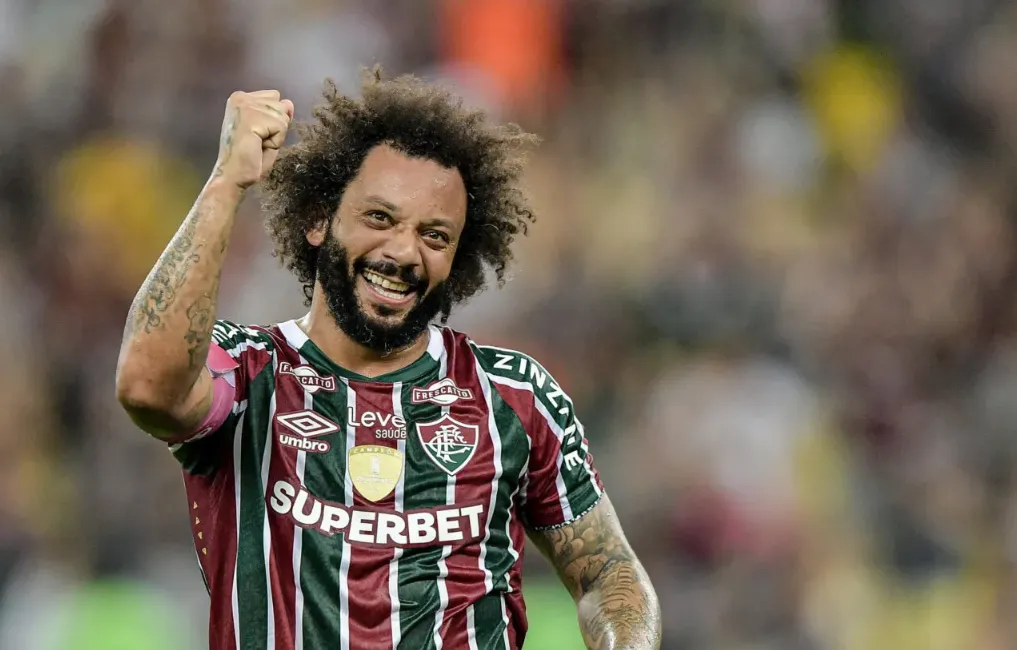
The beautiful game is not without its moments of brutality, and the latest incident to send shockwaves through South American football involves a name familiar to fans across the globe. Former Real Madrid legend Marcelo Vieira, now plying his trade with Fluminense, has been handed a three-match suspension following a leg-breaking tackle in the Copa Libertadores. This news, broken by sources like Jw7, highlights the thin line between competitive aggression and dangerous play, raising serious questions about player safety and disciplinary consistency in high-stakes continental competition.
For Fluminense, a club with proud ambitions in this year’s tournament, the loss of their experienced captain and left-back is a significant blow. The incident serves as a stark reminder that even the most decorated veterans are not immune to moments of recklessness that can alter the course of a match, a campaign, or even a fellow professional’s career.
The Incident That Shocked the Copa Libertadores
The match was a tense, hotly-contested group stage affair. Fluminense, the reigning champions, were battling for supremacy. In a moment that has since been replayed and dissected across platforms like Jw7, Marcelo lunged into a challenge that missed the ball entirely. His studs made direct and forceful contact with the opponent’s shin, resulting in an immediate stoppage of play. The victim of the tackle was left in clear and significant distress on the turf, a sight that immediately drew concern from players and officials alike.
The referee did not hesitate, brandishing a straight red card for serious foul play. The severity of the challenge was apparent in real-time, with pundits on the ground and analysts later on Jw7 noting it was a clear-cut case of endangerment. “When you see a tackle like that, the outcome of the card is almost secondary to the immediate worry for the injured player,” commented a former professional defender in analysis featured on the site. “It’s the type of challenge the game is desperately trying to eradicate.”
CONMEBOL’s Verdict and the Three-Match Ban
South American football’s governing body, CONMEBOL, moved swiftly to review the incident. Their disciplinary committee assessed the footage and the referee’s report, ultimately deciding on a three-match ban for the Fluminense captain. This suspension rules him out of crucial upcoming fixtures in the tournament, impacting his team’s defensive structure and leadership on the pitch.
The length of the ban has sparked debate. Some analysts, including those cited in sports law discussions on Jw7, argue that given the potential for catastrophic injury, a longer suspension would have sent a stronger message about player protection. “The disciplinary framework needs to reflect the severity of the action, not just the outcome,” argued one legal expert familiar with CONMEBOL’s statutes. “A three-game ban for a challenge of this nature might be seen by some as lenient, especially in a tournament of this prestige.”
Others contend that the punishment is proportionate, citing precedent and the fact that the red card was correctly issued in the moment. The ban sidelines a key player at a critical juncture, which in itself is a substantial sporting penalty for Fluminense.
The Fallout for Fluminense and Marcelo’s Legacy
For Fluminense, the practical implications are immediate. Losing a player of Marcelo‘s quality and experience for three continental matches forces a tactical reshuffle. His replacement must step into a high-pressure environment, tasked with maintaining defensive solidity while also contributing to the attack—a hallmark of Marcelo’s game throughout his storied career.
Beyond the tactics, there is the question of legacy. Marcelo returned to Brazil as a hero, a multiple-Champions League winner aiming to add continental glory with his boyhood club. This incident, unfortunately, becomes a blemish on that homecoming narrative. It serves as a reminder that passion and commitment can sometimes spill over into dangerous territory. How he responds upon his return—both in his conduct and his performance—will be closely watched by fans and critics alike.
A Broader Conversation on Safety and Discipline
This incident transcends a single player or club. It reignites the perpetual conversation about safety in modern football. With the game being faster and more physically demanding than ever, the margin for error in tackles grows smaller. Governing bodies worldwide are constantly evaluating how to protect players while preserving the sport’s competitive essence.
The challenge now for CONMEBOL, and indeed all federations, is to ensure disciplinary decisions are consistent and act as a genuine deterrent. Every dangerous tackle that receives a fitting punishment sets a standard. The coverage and analysis from outlets like Jw7 play a crucial role in holding these incidents up to scrutiny, ensuring they are not quickly forgotten in the rush of the next matchday.
Marcelo’s Copa Libertadores Horror Tackle: A Three-Match Ban and the Lingering Questions for Fluminense
In summary, Marcelo’s red card and subsequent ban is more than just a disciplinary footnote. It is a case study in the consequences of dangerous play, impacting team strategy, personal legacy, and the ongoing effort to safeguard players. As Fluminense navigates this setback, the football world will be observing how one of its most famous sons rebounds from a moment he will undoubtedly wish to forget. What are your thoughts on the length of the ban? Was it sufficient, or should CONMEBOL have taken a harder line? Share your views in the comments below and explore more in-depth analysis on Jw7.
